
What Makes a Functional Capacity Assessment Actually Useful?

What Makes a Functional Capacity Assessment Actually Useful?
A Functional Capacity Assessment can be thorough and still miss the point.
The point is not to produce the longest report possible. It is to give an accurate, useful picture of how a person manages everyday life, where support is needed and why the recommendations make sense.
At Good Days Health, our view is that a good Functional Capacity Assessment should connect evidence to real life. A diagnosis matters, but a diagnosis alone does not explain whether someone can prepare a meal, manage appointments, travel in the community, maintain a routine or complete personal care safely and consistently.That practical detail is where the assessment becomes useful.
Daily life is the real assessment
The NDIS describes functional capacity across communication, learning, mobility, self care, self management and social interaction. Those categories are important, but people do not experience life as six separate headings in a report.
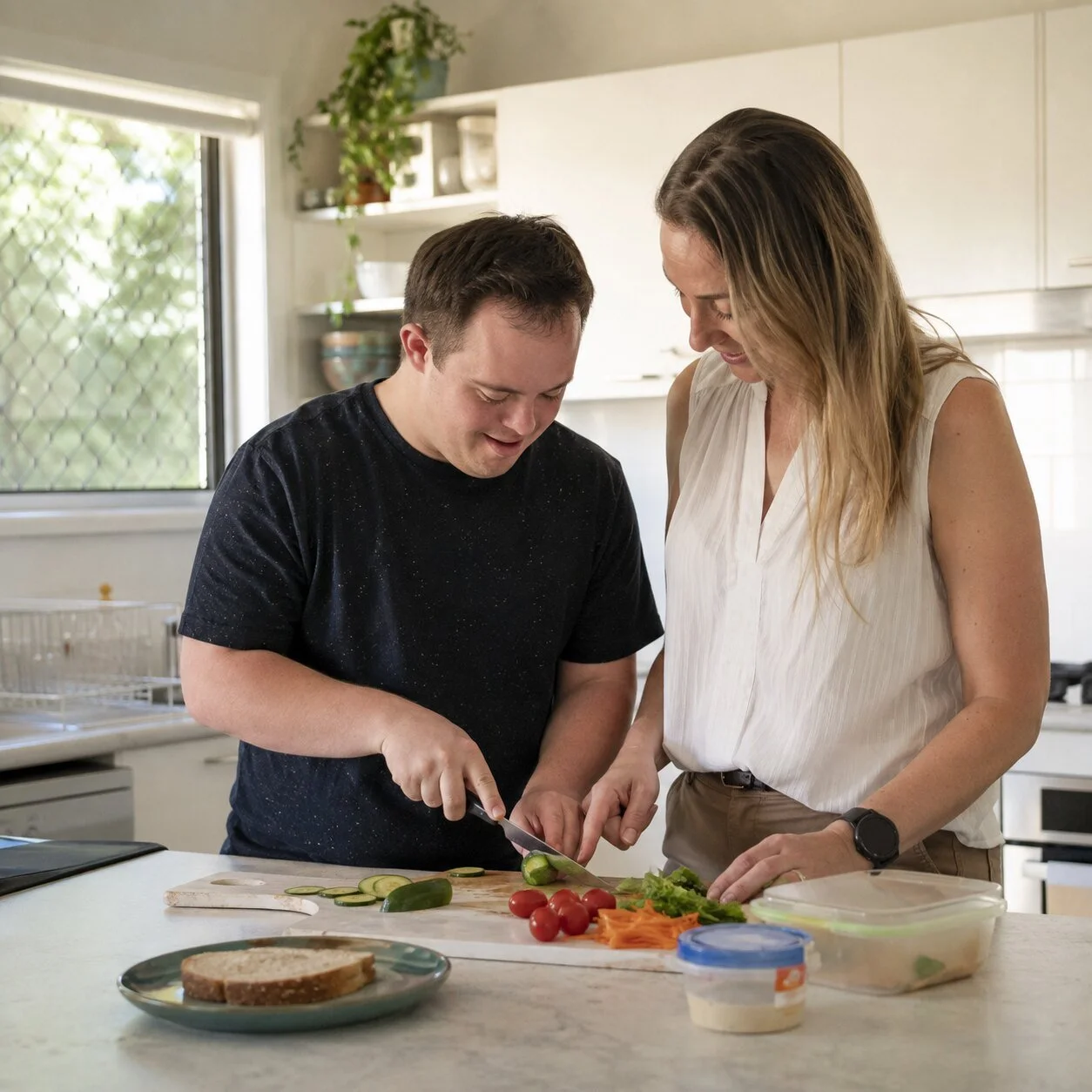
A person might be physically capable of preparing a meal but struggle to plan the steps, manage fatigue or notice safety risks. Someone may attend an appointment independently on a good day but be unable to do it reliably when pain, anxiety or cognitive overload increases.
This is why a useful assessment looks beyond whether a task can be completed once. It considers how safely, consistently and independently it can be completed, what support is required and what happens when conditions change.
Home and community based assessment can be particularly valuable because the environment often reveals barriers that are difficult to understand in a clinic. The layout of a bathroom, the height of a kitchen bench, transport options, sensory demands and the structure of a daily routine can all affect function.
A diagnosis is context, not the conclusion
Two people with the same diagnosis can have very different strengths, challenges and support needs.
An assessment should not work backwards from a diagnosis to a standard list of supports. It should consider the individual person, their goals, their environment, the activities that matter to them and the assistance already available.
That distinction matters. Recommendations are stronger when the report clearly explains the link between the person’s functional barriers, the evidence gathered and the support being recommended.
Recommendations need a reason
A recommendation should not appear in a report simply because it is commonly requested.
Useful recommendations explain what problem is being addressed, what outcome is expected and why the proposed support is appropriate. They should also consider whether a simpler option could work.
Depending on the person, recommendations might relate to therapy, assistive technology, changes to the home or workplace, personal support or strategies for managing daily routines. The correct mix will be different for every participant.
A good report should also be honest about uncertainty. If further assessment, a trial or input from another professional is needed, that should be stated clearly.
What can referrers do before the assessment?
Support coordinators, families and other referrers can help by sharing the reason for the assessment and the decision it needs to inform.
Useful information can include:
Current goals and main daily barriers.
Existing reports and relevant health information.
Current supports and where they appear insufficient.
Recent changes in function, living arrangements or informal support.
Important deadlines, such as a plan reassessment.
The participant’s preferred communication style and appointment setting.
More information is not always better. Relevant information is better.
The report should make the person recognisable
The strongest Functional Capacity Assessments do not read like templates. They describe a real person with specific strengths, challenges, routines and goals.
That does not mean the writing needs to be emotional or dramatic. It means the evidence should be clear enough that someone reading the report can understand what daily life looks like and why particular supports are being considered.
Length alone does not create quality. Clear reasoning does.

Refer for a Functional Capacity Assessment in Brisbane
Good Days Health provides mobile Functional Capacity Assessments for NDIS participants across Brisbane, Logan, Ipswich and surrounding areas.
If you are unsure whether an FCA is the right assessment, contact us before referring. We would rather clarify the purpose first than complete an assessment that does not answer the question you need answered.
Refer a client through our secure referral form or contact Good Days Health to discuss the situation.